Active Kids, Healthy Future: Fun Exercise Tips
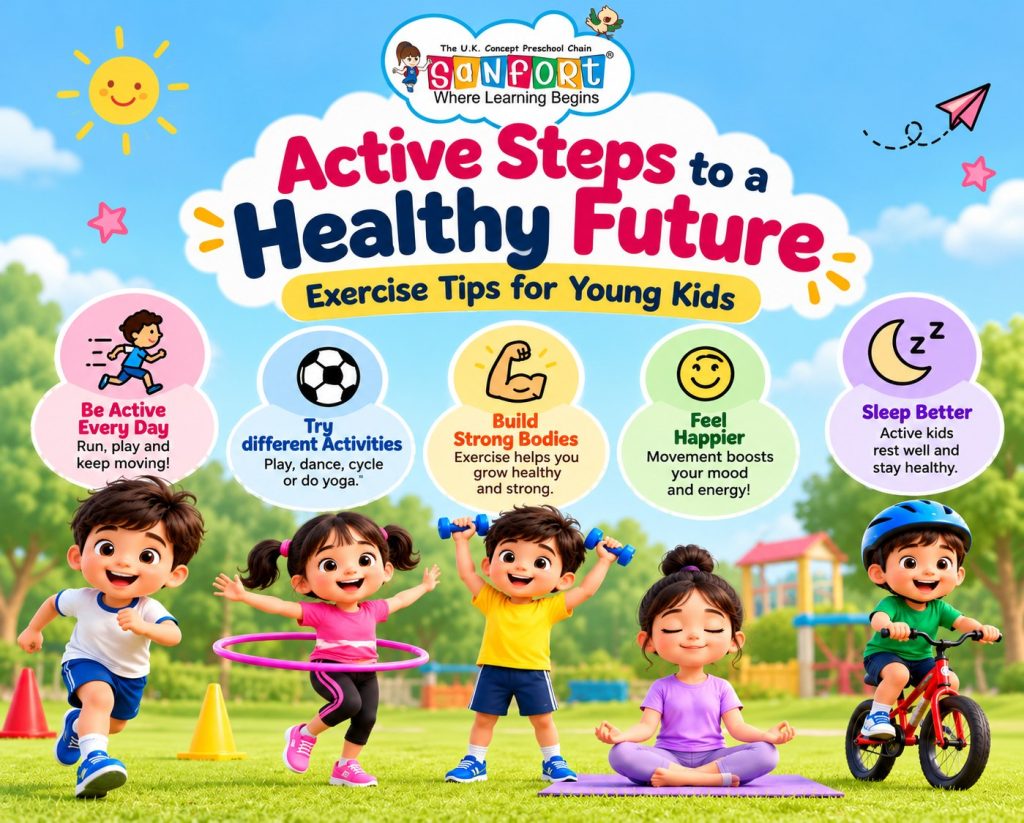
The early years of childhood lays the foundation for a healthy, happy, and active life. This is a very crucial period when children grow rapidly, develop essential motor skills, and discover the world around them. While proper nutrition and emotional well-being are important for their development but regular physical activity plays an equally important role in helping young children in building strong bodies and active minds.
In today’s world when children are increasingly attracted to mobile phones and other screens, it’s very important to encourage them for some or other physical activities like- move, play, run, jump, dance, etc. The best thing is that exercise for young children does not need to be complicated or structured, just a simple outdoor play like running or jumping is exercise for them.
1. Make Outdoor Play a Daily Routine
Outdoor activities offer children opportunities to move freely, explore nature, and develop love for outdoor play. Running, jumping, climbing, and playing age-appropriate sports improve balance, coordination, muscle strength, and agility.
Outdoor play is an integral part Sanfort Preschool Curriculum which encourages children to go out for outdoors every day. A visit to the park, jumping or simply running around in a safe open space can make a meaningful difference.
2. Turn Exercise into a Fun Game
Children learn best through play during their early years. Instead of expecting them to follow a formal exercise routine, it is more effective to introduce fun and engaging games that encourage natural movement. Activities such as dancing, hopping, jumping, running, and playing with a ball not only keep children physically active but also help develop their coordination, balance, motor skills, and social confidence. When exercise becomes an enjoyable part of everyday play, children are more likely to develop healthy habits that stay with them throughout life.
Simple and Fun Activities to Keep Young Children Active
- Animal Walks: Encourage children to hop like frogs, walk like bears, or stretch like cats. These playful movements help improve balance, coordination, and muscle strength.
- Follow the Leader: Take turns leading simple movements such as marching, clapping, jumping, and stretching. This game encourages imitation, concentration, and active participation.
- Dance and Freeze: Play cheerful music and let children dance freely. Pause the music occasionally and ask them to freeze in place. This activity promotes body control, listening skills, and coordination.
- Ball Games: Encourage children to roll, kick, throw, and catch soft balls. These activities strengthen hand-eye coordination, motor skills, and physical confidence.
- Obstacle Courses: Create simple, age-appropriate obstacle courses using safe objects that children can step over, crawl under, or walk around. These activities help develop balance, agility, and spatial awareness.
3. Build Healthy Habits Through Family Participation
Children are more likely to enjoy physical activity when their parents participate. A family walk, dancing together, playing catch, or cycling on a safe path can turn exercise into a daily routine.
Parents can also encourage healthy habits by:
- Taking the stairs when appropriate and safe.
- Walking short distances together wherever possible.
- Celebrating their every small effort.
- Allowing children to choose games or activities they enjoy.
- Making movement a routine activity of family life.
We should not expect children to perform every movement perfectly. Instead, we should create opportunities for them to stay active, encourage their efforts, and lead by example. When parents and educators participate enthusiastically, children feel more confident, motivated, and excited to learn.
4. Limit Screen Time and Encourage Movement
In today’s digital age, children are increasingly drawn to mobile phones, tablets, and televisions. The excessive screen time may reduce the time children spend on physical activity, creative play, and meaningful social interaction.
Parents and educators should encourage children to replace screen-based entertainment with engaging activities such as outdoor games, dancing, storytelling, drawing, and imaginative play.
Most importantly, children learn from what they see. When parents put away their phones and actively participate in play, children are more likely to follow their example.
The goal is not simply to reduce screen time, but to create more opportunities for children to move, explore, interact, and learn. By striking the right balance between technology and active play, we can help young children build healthier habits for a brighter future.
5. How Preschools Can Encourage Active Learning
Preschools play an important role in developing healthy habits during the early years. Physical activity should be an integral part of the school day rather than an occasional addition.
Schools can support active development through:
- Daily outdoor play and age-appropriate movement sessions.
- Music, dance, drama and role paly activities.
- Safe playgrounds and equipment suited to different developmental stages.
- Activities that develop balance, coordination, flexibility, and gross motor skills.
- Inclusive play opportunities for children with different abilities.
- Regular communication with parents about movement, sleep, and healthy routines.
At SANFORT, the broader message for early childhood education is clear: a child’s development involves much more than academic learning. Movement, exploration, social interaction, and play are essential elements of a well-rounded early learning experience.
You May Like to Read:- Why Do Parents Prefer Branded Preschools in India?
Conclusion: Small Steps Today, Healthier Tomorrows
A healthy future begins with small, consistent habits established during childhood. Every jump, dance, run, stretch, and outdoor adventure gives children an opportunity to develop physically, emotionally, and socially.
Parents and educators must work together to create environments where children can move freely, play safely, and discover the joy of being active. Instead of focusing on exercise as a task, we should make it a natural and enjoyable part of everyday life.
Let us remember: active children today can become healthier, more confident adults tomorrow.