India’s preschool sector is becoming increasingly organized.
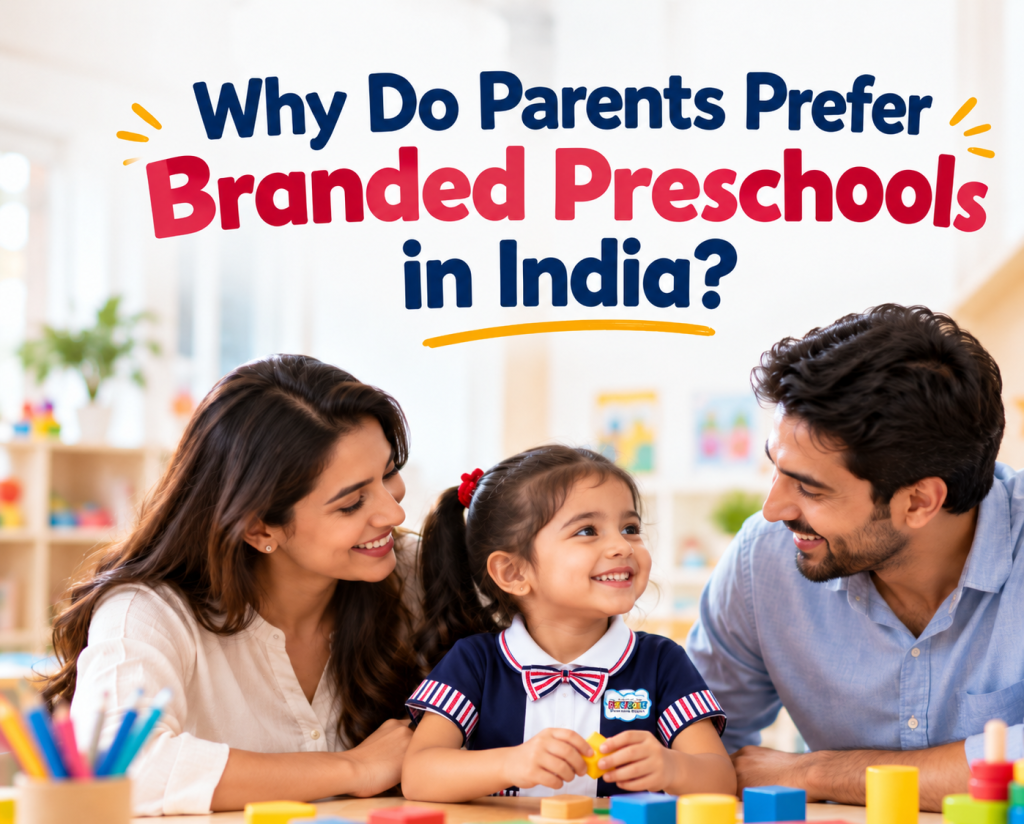
The early years of a child’s life play a crucial role in shaping their personality, learning abilities, social skills, and emotional well-being. As awareness of early childhood education continues to grow in India, parents are becoming more thoughtful about choosing the right Preschool for their little ones. Increasingly, many families are opting for Branded Preschools that offer a structured learning environment, a recognised identity, and a consistent approach to early education.
But what makes branded preschools an attractive choice for today’s parents?
1. Trust and Brand Recognition
For parents, choosing a preschool is not simply about finding a place where their child can spend a few hours. It is about entrusting their child’s safety, care, and early development . An established & recognised preschool brand can give parents a assurance of quality early childhood education through its established identity, defined processes, and clearly defined educational philosophy.
2. Structured and Research-Informed Curriculum
Today’s parents understand that preschool education goes far beyond rhymes, colouring, and alphabet recognition. They look for the curriculum that support language development, early numeracy, creativity, physical development, problem-solving, and social-emotional growth.
Branded preschools often offer a structured curriculum with age-appropriate learning objectives, planned activities, and opportunities for learning through play. This helps create a more organised and purposeful early learning experience.
3. Safety, Hygiene, and Child-Friendly Infrastructure
A child’s safety is one of the foremost concerns for every parent. Families want a preschool that provides a clean, safe & secure, welcoming, and stimulating environment.
Branded preschool have their clearly defined guidelines for safety, hygiene, classroom management, and child supervision which each individual centre have to implement.
4. Trained Teachers and Consistent Teaching Practices
Early childhood education requires specialised skills, patience, empathy, and an understanding of how young children learn. Parents understand the importance of teachers who can nurture curiosity, manage emotions, encourage independence, and identify developmental needs.
Branded preschool networks may provide teacher training, classroom resources, lesson-planning frameworks, and ongoing academic guidance.
5. Learning Through Play and Practical Experiences
Children learn best when they are actively involved, curious, and emotionally engaged. Branded preschools offers activity-based learning, storytelling, music, movement, role-play, sensory exploration, and hands-on experiences help children develop essential skills naturally. A well-designed preschool programme makes learning enjoyable while preparing children for their next stage of education.
6. Better Communication and Parent Engagement
Today’s parents want to understand what their children are learning, how they are progressing, and where they may need additional support.
Branded preschools may provide structured parent-teacher meetings, progress updates, school events, activity reports, and opportunities for regular interaction. This partnership between parents and educators can strengthen a child’s learning experience and build mutual trust.
7. Technology-Enabled Learning and Teaching Resources
Technology is becoming an important part of the preschool ecosystem. Digital teaching aids, interactive learning resources, and communication platforms can support teachers and improve parent engagement when used appropriately.
8. A Consistent Educational Identity
Parents often appreciate a preschool that follows a clearly defined educational philosophy and maintains consistent expectations across its classrooms.
An established brand may offer standardised teaching resources, learning frameworks, operational guidance, and quality benchmarks. This can make the educational experience more predictable for families, especially when they relocate and opt for another centre within the same network.
9. Preparation for Formal Schooling
Preschool is an important bridge between home and formal schooling. Parents want their children to enter primary school with confidence, curiosity, communication skills, and the ability to participate in group activities.
A quality preschool supports school readiness by developing early literacy and numeracy, listening skills, independence, cooperation, attention, and emotional regulation.
10. Value Beyond the Fees
Parents increasingly consider the overall value a preschool offers rather than looking at fees alone. They assess the quality of teaching, safety standards, learning opportunities, communication, infrastructure, and individual attention.
A recognised brand may offer a clear framework for these services, but parents should compare actual performance and outcomes rather than assuming that a brand name automatically guarantees quality.
Why This Matters for the Indian Preschool Sector
India’s preschool sector is evolving as families become more aware of early childhood development and seek organised, reliable learning environments. Branded preschools have an opportunity to meet these expectations by combining a strong educational philosophy with effective teacher training, safe infrastructure, transparent communication, and continuous quality improvement.
For preschool owners, building a successful brand is not merely about visibility or marketing. It is about delivering a meaningful and consistent experience for children and families.
The SANFORT Perspective: Building Trust Through Early Learning
At SANFORT Play School, the larger opportunity lies in making early childhood education engaging, purposeful, and developmentally appropriate. By focusing on child-centred learning, innovative teaching resources, teacher support, and meaningful parent engagement, a preschool can build stronger relationships with families and establish a trusted presence in its community.
For parents, the ultimate measure of a preschool is not simply its name, popularity, or infrastructure. It is whether their child feels safe, happy, encouraged, and excited to learn.
Conclusion
Parents do not choose a preschool brand merely for its name; they choose the confidence, consistency, and learning experience they believe it represents.
The strongest preschool brands will be those that combine the credibility of an established identity with the warmth of personal care—because every child deserves a safe beginning, meaningful learning experiences, and the opportunity to reach their full potential.
You May Like to Read: – Top 10 Best Preschools in Delhi NCR